
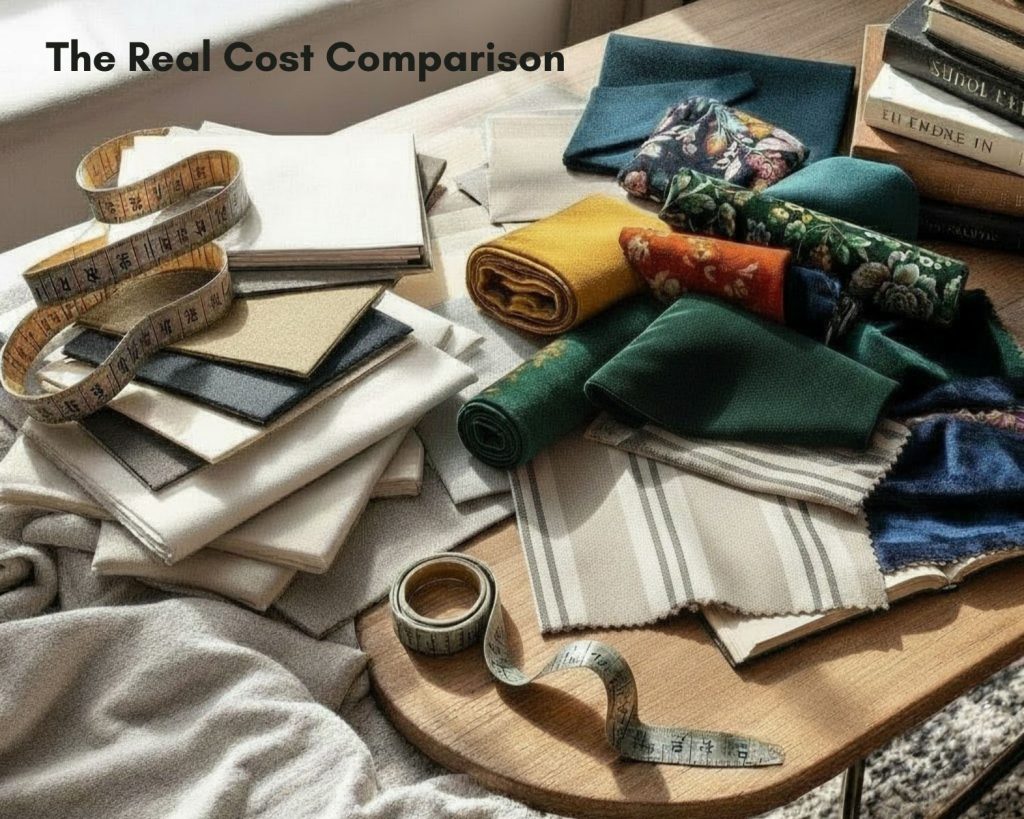
The Real Cost of Ready-Made vs. Custom Window Treatments
When homeowners begin shopping for window treatments, ready-made options often seem like the easier and less expensive choice. They are available immediately, easy to browse, and often marketed as a budget-friendly solution. At first glance, grabbing a set of blinds or panels from a big box store can feel like a smart decision.
But many homeowners do not realize the true cost of ready-made window treatments until after the purchase is made. What looked affordable in the store can quickly become frustrating and expensive once measuring mistakes, poor fit, returns, replacement hardware, and disappointing results enter the picture.
If you are trying to decide between ready-made and custom window treatments, it is important to look beyond the sticker price. The real cost comparison is about more than what you spend on day one. It is also about fit, function, durability, appearance, and whether you end up paying twice to get the look and performance you wanted in the first place.
Why ready-made looks less expensive at first
Ready-made blinds, curtain panels, and shades are designed to fit a wide range of standard window sizes. Because they are mass produced, the upfront price is usually lower than custom products. For homeowners who are furnishing a room quickly or working on a tight budget, that can be appealing.
The problem is that most homes do not have perfectly standard needs. Even when window sizes seem straightforward, small differences in width, depth, trim, mounting requirements, and light control needs can affect how well an off-the-shelf product works. Once you bring those products home, the hidden costs often begin.
The hidden costs homeowners do not expect
One of the biggest issues with ready-made treatments is measuring error. A blind that is slightly too narrow can leave unwanted light gaps. A curtain panel that is too short can make the entire room feel unfinished. A shade that does not fit the depth of the window frame may have to be mounted differently than planned, changing the whole look.
Then come the extra costs:
- repeated trips to the store
- return shipping or restocking issues
- replacement brackets or hardware
- additional panels to get proper fullness
- tools or supplies for installation
- the cost of your own time
Even when the product technically “works,” it may not perform the way you hoped. You may still have glare, privacy issues, uneven hanging panels, or a style that looks temporary rather than polished.
For many homeowners, the biggest hidden cost is disappointment. They settle for something that is close enough, but not really right.
Where custom saves money over time
Custom window treatments cost more upfront, but they are designed for your windows, your home, and the way you actually live. That means you are not guessing about size, fabric, hardware, or function. A professional consultation helps you choose the right product for each room, whether that means solar shades in a bright family room, lined drapery in a bedroom, or layered treatments in a formal living area.
Custom saves money over time because it reduces costly mistakes. The measurements are done correctly. The product is made to fit. The installation is handled professionally. And the finished look is intentional rather than improvised.
That matters because window treatments are not just decorative. They affect privacy, insulation, glare control, furniture protection, and the overall feel of the room. A well-chosen custom treatment does its job better and usually lasts longer.
In many cases, homeowners who start with ready-made options eventually replace them with custom treatments anyway. When that happens, the “less expensive” route becomes the more expensive one.
The difference you can see every day
Custom window treatments are often worth it for reasons that go beyond dollars. They tend to hang better, fit better, and look more complete. They can be matched to the room’s scale, color palette, architecture, and lighting conditions. Instead of trying to make a standard product work, you are choosing a solution designed specifically for your space.
That daily difference adds value in a way homeowners feel right away. Rooms feel more finished. Light is controlled more effectively. The overall design looks intentional. And because the installation is done correctly, the result feels permanent and professional rather than temporary.
When ready-made may still make sense
Ready-made products are not always the wrong choice. They may work well in temporary situations, rental properties, or secondary spaces where design precision is less important. If you need a quick privacy solution for a short-term space, off-the-shelf options can be practical.
But for main living areas, bedrooms, dining rooms, offices, and spaces where appearance and function both matter, custom is often the smarter long-term investment.
A quick checklist before you decide
Before choosing window treatments, ask yourself:
- Do I know the exact measurements and mounting needs of my windows?
- Is this a room where appearance really matters?
- Do I need privacy, light control, insulation, or glare reduction?
- Am I willing to spend time returning or replacing products if they do not fit?
- Will I be satisfied with “good enough,” or do I want it done right the first time?
If those questions make you hesitate, a professional consultation may save you money, stress, and regret.
The smarter investment
The real cost comparison is not just about what happens at checkout. It is about whether the product fits, performs, lasts, and gives your home the finished look you want. Ready-made options can seem less expensive, but the hidden costs add up quickly. Custom window treatments often save money over time by helping homeowners avoid mistakes and get a better result from the start.
When you invest in custom, you are not just buying fabric or shades. You are investing in proper fit, better function, professional installation, and a home that looks thoughtfully finished.
When you talk to a designer at Stocks Draperies you will be able to make an informed decision on the purchase of window treatments for your home.