
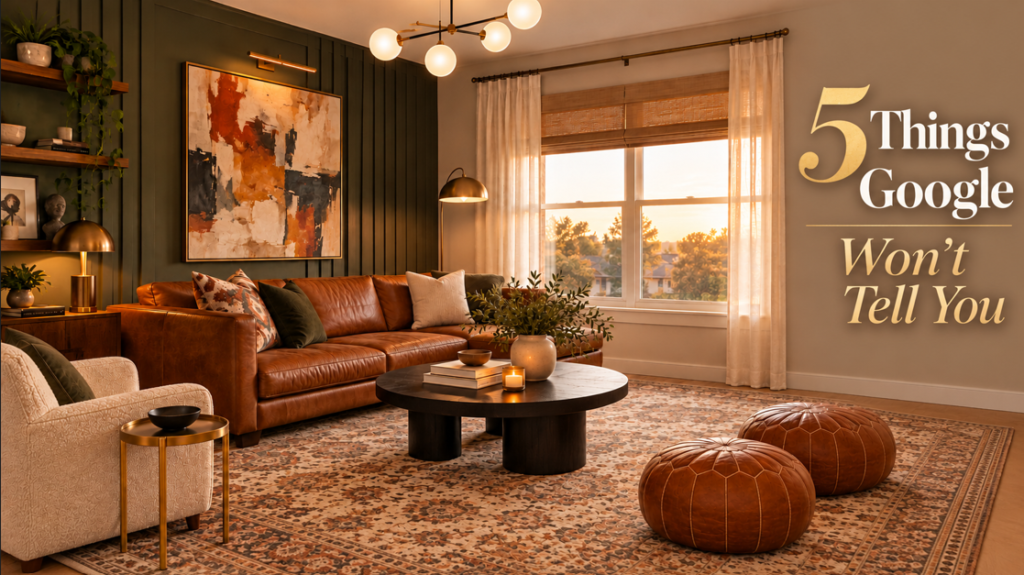
The five things that trip up almost every homebuyer — and how having the right person in your corner changes all of them.
You’ve closed. The keys are yours. And now you’re standing in an empty room with a tape measure, a phone full of saved Pinterest posts, and absolutely no idea where to begin.
You’re not alone. Whether you’re buying your first real home, moving into something larger, or finally reclaiming rooms that were always someone else’s – the moment between “move-in day” and “room that actually feels right” is harder than anyone tells you it will be.
Here are the five things that trip up almost every homebuyer – and what changes when you have someone who actually knows the industry in your corner.
1. Decision Paralysis: When Every Option Feels Wrong
It starts with paint colors and escalates quickly. By the time you’re trying to choose between seventeen shades of the same greige, coordinating window treatments for six different rooms, and figuring out whether your existing furniture even goes together, the whole project feels impossible.
Decision paralysis is real – and it’s not a personality flaw. It’s what happens when you’re trying to visualize a finished room in an empty space, without a trained eye to help you see what isn’t there yet.
A designer’s first job is to narrow the field. She doesn’t give you more options – she gives you the right ones, filtered through an understanding of your light, your lifestyle, and how you actually want to live in the space. The decisions get dramatically easier when someone who has made them a thousand times is making them with you.
2. Scale and Proportion: The Mistakes You Can’t See Coming
The rug looked perfect online. The sofa dimensions seemed reasonable in the showroom. The floor-length drapes were going to make the room feel taller.
Then everything arrived, and nothing worked the way you pictured it.
Scale and proportion are the hardest things to visualize in a space you haven’t lived in yet – and a mistake of a few inches in either direction can mean non-refundable returns and starting over. A rug that’s too small makes a seating area look like it’s floating. A sofa that’s too large makes a room feel like furniture storage. Custom blinds measured half an inch off are unusable.
A designer sees this in the first five minutes. It’s not instinct – it’s pattern recognition built from years of watching what works and what doesn’t. And catching it before you buy is always cheaper than fixing it after.
3. The Hidden Costs Nobody Mentions
New homebuyers almost always budget for the big things – furniture, flooring, paint. What they don’t budget for is the cost of the mistakes.
A custom window treatment that doesn’t fit. A sofa that overpowers the room. A rug that needs to be replaced because it can’t handle the actual traffic of an actual family. These aren’t rare. They happen to smart, careful people who were simply making decisions without someone who does this every day.
A designer doesn’t add to your budget – she helps you spend it in the right places. She knows which corners are safe to cut and which ones cost you twice. She knows what to prioritize and what can wait. The goal is never to spend more — it’s to spend once, on the right things, in the right order.
4. Lead Times, Timelines, and the Logistics Nobody Warned You About
A custom sofa takes 12 weeks. Standard rugs take 3 days. Custom window treatments take 6 weeks. And most people find out about this after they’ve already closed.
The result is predictable: families sitting on the floor of an otherwise finished home, living in a “fishbowl” with no window privacy, coordinating three different delivery windows with three different vendors – all while trying to actually settle into a new place.
Getting things ordered in the right sequence, before you need them, is one of the most underrated things a designer does. It’s not glamorous. It’s logistics – and it’s exactly the kind of expertise that turns a stressful move into a smooth one.
5. Functional Overlooks: The Things You Won’t Notice Until It’s Too Late
You chose the window treatments for how they look. Then you moved in and realized the morning sun wakes you at 5am, or the streetlight shines directly into the living room after dark, or the beautiful sheer you loved in the showroom means the neighbors can see straight into your kitchen all evening.
Lifestyle compatibility is something most people don’t think about until after the expensive decision. The gorgeous wool rug that can’t handle a dog and two kids. The velvet sofa that shows every mark. The window treatment that’s perfect in photos and a daily frustration in real life.
A good designer asks about your life before she talks about your room. How many people live there? Do you have pets? How do you use the space at different times of day? What does the light do in each season? These questions aren’t small talk – they’re the foundation of every decision that follows.
The Shortcut That Isn’t Really a Shortcut
Google is useful. Pinterest is inspiring. But neither one knows your room, your light, your life, or your budget. And neither one can pull a fabric swatch off the shelf and hold it up to your window to show you exactly how it’s going to look.
That’s what we do at Stocks Draperies and Design. A conversation with our team – with Maria, our Lead Interior Design Consultant – starts with your life and ends with a room that actually works for it. Window treatments, rugs, fabrics, furniture: all of it sourced, coordinated, and installed by people who have been doing this in Canton for more than 55 years.
Come in before you buy. It’s the easiest decision you’ll make. Visit our website stocksdraperies.com for more information or to schedule your free personalized consultation.