
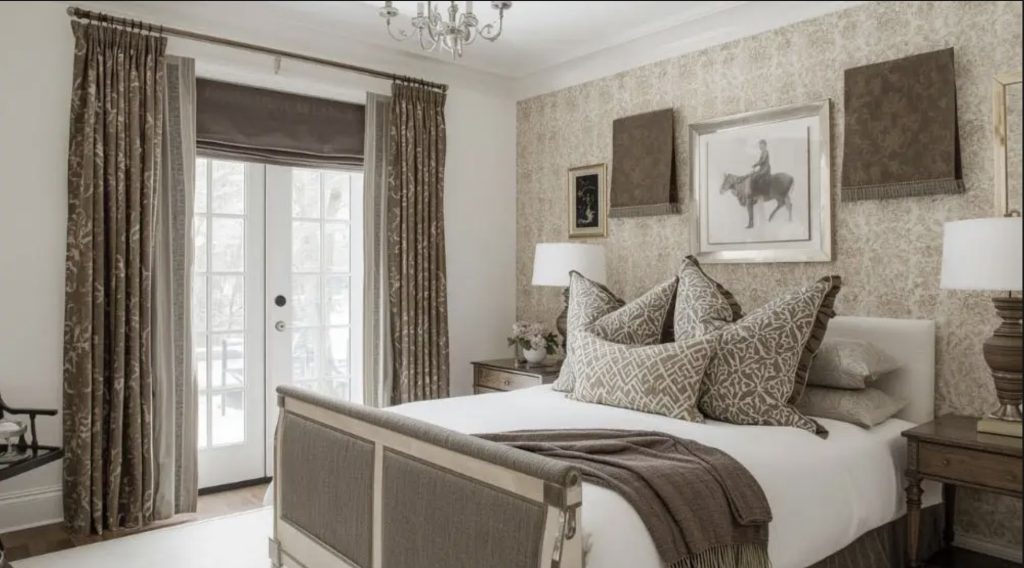
One Fabric, Whole Room: Coordinating Custom Draperies, Pillows, Bedding & Valances
If you’ve ever tried to “pull a room together” with a new comforter, a few throw pillows, or a pretty fabric you fell in love with online—only to find that everything is almost right but not quite—you’re not alone. It’s one of the most common frustrations we hear: the room isn’t bad, it just doesn’t feel finished.
The fastest way to get that finished, designer feeling isn’t buying more décor. It’s building a fabric story – a simple plan that connects your windows, your bed (or seating), and your details so the room feels intentional.
One of the easiest approaches is what we call: One Fabric, Whole Room. It doesn’t mean everything matches. It means one fabric (or one “anchor”) sets the tone, and the rest supports it.
Why “almost matching” never looks finished
Retail textiles are designed to coordinate with everything—which usually means they coordinate perfectly with nothing. Whites aren’t the same white. Neutrals can lean pink, yellow, green, or gray. Patterns look different at full scale. And the moment you put the pieces together, the room feels slightly off.
That’s not your fault. It’s the difference between:
- Collecting items that are “close,” and
- Designing a plan where every piece is chosen to work together.
The designer difference: coordination vs. matching
“Matching” often looks flat and dated—too much of the same fabric everywhere. Coordination is what makes a room look layered and curated.
A coordinated room usually includes:
- One pattern or focal fabric (the anchor)
- One or two solids that support it
- One texture that adds depth (linen-look, slub weave, subtle basket weave, etc.)
- A consistent color story repeated in a few key places
The result feels cohesive, not busy. Finished, not forced.
Step 1: Choose the anchor fabric that sets the tone
Your anchor fabric can be a pattern you love, a richly textured solid, or even a subtle design with movement. The best anchor fabric is one that fits three things:
- Your style
Classic, modern, cozy, bold, calm/neutral, traditional—your fabric should immediately “sound like you.” - Your room’s fixed elements
We take cues from floors, wall color, large furniture pieces, and any built-ins you’re not changing soon. - Your light and lifestyle
Sunny rooms, high-traffic family spaces, and bedrooms all want slightly different fabric choices. (This is also where lining and layering decisions come in.)
Step 2: Put the anchor where it matters most: the windows
Windows are usually the largest visual “surface” in the room – so what you do there sets the entire direction.
Custom draperies are often the best place to feature the anchor fabric because they:
- Add softness and structure
- Create height and “architecture”
- Make the space feel finished immediately
- Provide a consistent backdrop that ties the room together
And unlike ready-made panels, custom draperies are designed for your window size, your fullness preference, and the look you want (tailored, relaxed, dramatic, minimal, etc.).
Step 3: Repeat the story in the right places
Once the window treatment is chosen, we repeat the fabric story in smaller doses so it feels intentional—without overwhelming the room.
Here are the most common ways:
Coordinating pillows (the easiest win)
Pillows are the simplest way to repeat the anchor fabric. Even two pillows in the right fabric can make the whole room feel connected.
Bedding accents (a “designer” move without redoing the bed)
Instead of replacing everything, you can add:
- A bed scarf
- A bolster
- Euro shams
- Accent pillows that tie back to the drapery fabric
This is especially helpful when you love your comforter or duvet but want the bed to look more curated.
Valances or top treatments (for polish and proportion)
Valances and top treatments can:
- Add a finished edge to the window
- Create a more classic or layered look
- Help balance tall ceilings or large walls
- Bring the fabric story to the “top line” of the room
These aren’t necessary in every space—but in the right room, they’re the detail that makes it feel professionally designed.
Step 4: Mix solids + texture so it doesn’t feel matchy
A simple formula we often use:
1 pattern + 1 solid + 1 texture
That’s it. That’s the secret.
For example:
- Patterned draperies + solid pillows + textured throw/blanket
- Textured solid draperies + patterned pillows + crisp solid bedding accents
- Sheers + solid drapery + one bold accent fabric on pillows
This creates layering and depth without visual chaos.
Step 5: Pattern scale matters (especially at the window)
One of the biggest surprises for homeowners: a pattern that looks perfect on a small swatch can feel totally different when it becomes an 8-foot panel with folds and pleats.
We help you think through:
- Large-scale patterns (often feel luxe and intentional at the window)
- Small-scale patterns (can feel busy when repeated over tall panels)
- How the pattern will look from across the room (not just up close)
Scale also affects pillows and bedding accents. What looks calm on draperies might feel too big on a small pillow—or vice versa. That’s why the “whole room” plan matters.
Three quick “room recipes” to picture it
Recipe 1: Calm + Classic
Textured solid draperies + patterned pillows + crisp solids on the bed
Recipe 2: Soft Statement
Patterned draperies + solid pillows + a textured neutral throw or bedding accent
Recipe 3: Layered + Luxurious
Sheers + solid drapery panels + one anchor pattern repeated in a pair of pillows and a small accent piece
These recipes keep decisions simple while still creating a designer look.
The easiest way to get it right: plan first, then customize
When you build a room fabric story intentionally, everything gets easier:
- You stop chasing “almost matching”
- Your purchases feel confident
- The room looks finished faster
- Your windows and soft goods feel connected (not random)
If you’re ready to create a cohesive look—custom draperies, pillows, bedding accents, and optional top treatments—we can help you select the fabric story that fits your home, your light, and your lifestyle.
Ready to design your fabric plan?
Book your planning appointment here.